


3 minute read
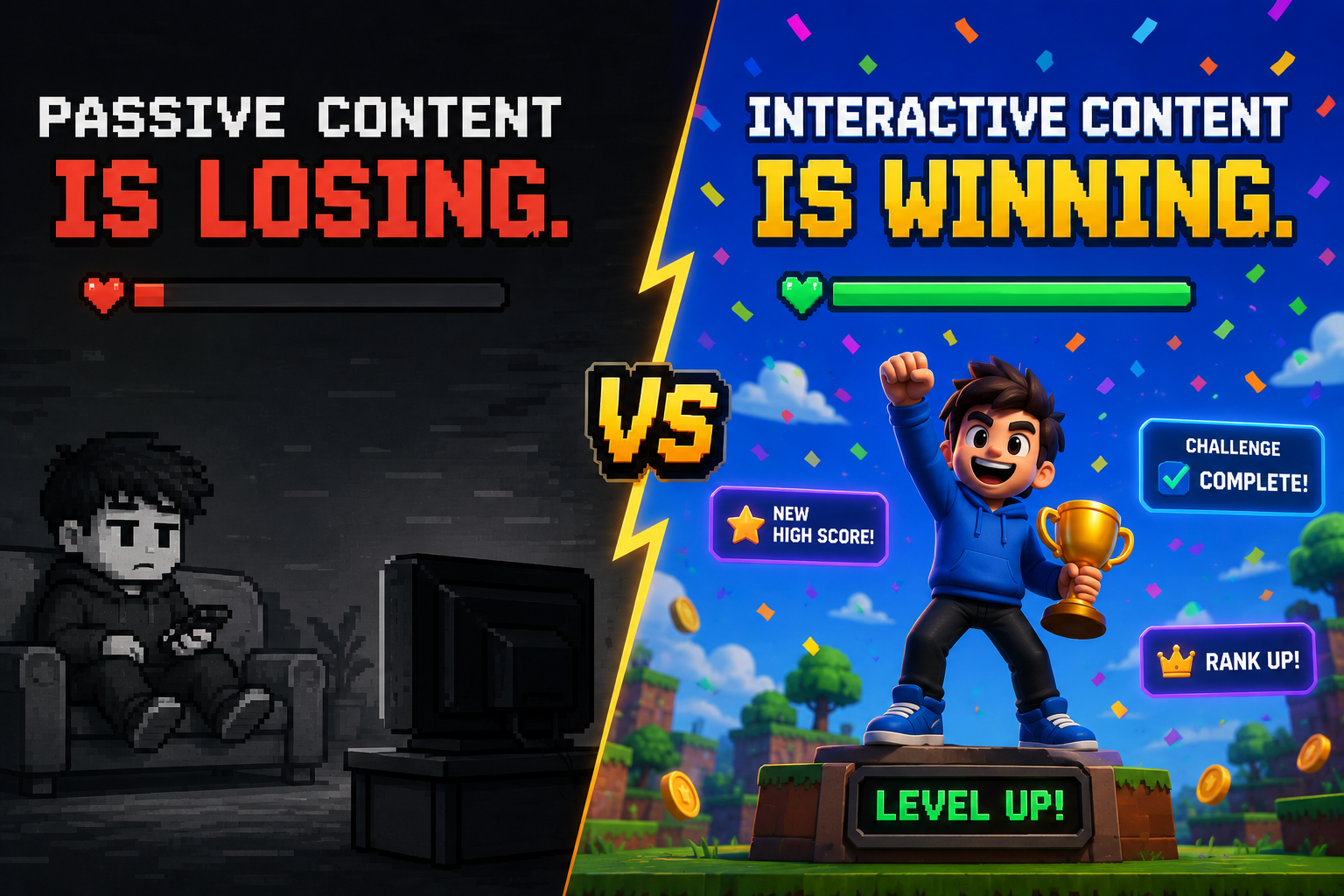
Passive Content Is Losing. Interactive Content Is Winning
by Tim CohenEvery year, creators produce more content than the year before.
More videos.
More podcasts.
More livestreams.
More posts.
More newsletters.
More shorts.
More reels.
More stories.
Yet despite all of this growth, one thing hasn't changed.
Most content still asks audiences to do exactly one thing:
Watch.
For years, simply capturing attention was enough.
Today, attention alone is becoming a commodity.
The next competitive advantage isn't creating more content.
It's creating content people can interact with.
The Internet Has Always Moved Toward Greater Participation
The history of the internet isn't just the evolution of technology.
It's the evolution of participation.
Early websites were digital brochures.
You visited.
You read.
You left.
Then blogs gave readers the ability to comment.
Forums let communities hold conversations.
Wikipedia let anyone contribute knowledge.
Social media gave everyone a voice.
Livestreams introduced real-time interaction.
Each major evolution asked users to do more than simply consume.
It invited them to participate.
Interactive content is simply the next step in that progression.
Passive Attention Has Limits
Watching a video is passive.
Reading an article is passive.
Listening to a podcast is passive.
There's nothing wrong with passive media.
It educates.
It entertains.
It informs.
But passive media has an inherent limitation.
The audience remains an observer.
Participation changes that relationship.
The moment someone answers a question, makes a prediction, solves a challenge, or competes with friends, they stop being an audience member.
They become an active participant.
That small shift has significant implications for engagement.
The Competition for Attention Has Never Been Greater
Creators today aren't competing against people in their niche.
They're competing against the entire internet.
Every scroll introduces another creator.
Another recommendation.
Another notification.
Another livestream.
Another video.
Publishing more content is becoming increasingly difficult as a way to stand out.
Creating memorable experiences may become a more durable advantage.
People often forget another video they watched yesterday.
They are much more likely to remember an experience they actively participated in.
Participation Creates Investment
Psychologists have long recognized that people value experiences they contribute to.
When we answer questions...
Make choices...
Earn points...
Unlock achievements...
Or compete with friends...
We're no longer just consuming.
We're investing effort.
That investment creates a stronger connection than passive observation alone.
It's one reason quizzes, polls, fantasy sports, interactive maps, and educational simulations continue attracting millions of users despite their simplicity.
People enjoy participating.
Every Creator Needs Reasons for Fans to Return
Traditional content follows a familiar pattern.
Publish.
View.
Move on.
Interactive experiences create additional reasons to return.
Fans come back to improve scores.
Challenge friends.
Play new games.
Unlock achievements.
Complete weekly challenges.
Test new knowledge.
Instead of a single viewing session, creators can build ongoing engagement loops that encourage repeat visits.
The Future Isn't More Content
When people imagine the future of the creator economy, they often imagine longer videos.
Better AI editing.
Smarter recommendation algorithms.
More personalized feeds.
Those innovations will certainly matter.
But they don't fundamentally change the relationship between creators and audiences.
Interaction does.
The future isn't simply about making better content.
It's about giving audiences meaningful ways to participate in it.
What Interactive Content Looks Like
Interactive content doesn't need to be complicated.
Sometimes it's a personality quiz.
Sometimes it's a prediction challenge.
Sometimes it's trivia.
Sometimes it's choosing your favorite products.
Sometimes it's solving a puzzle.
Sometimes it's testing how well fans know a creator.
The interaction itself isn't the point.
The participation is.
Even lightweight experiences can transform how audiences engage with creators.
A New Layer of the Creator Economy
Interactive experiences won't replace videos.
Or podcasts.
Or newsletters.
Or social posts.
Just as comments didn't replace blogs...
And livestreams didn't replace recorded video...
Interactive content won't replace existing media formats.
It will become another layer.
Creators will continue publishing content.
But increasingly, they'll also create experiences that extend that content beyond the screen.
Looking Ahead
Every major communication platform has eventually become more interactive.
The creator economy appears to be following the same path.
As audiences become harder to capture and even harder to retain, creators will look beyond publishing and begin designing experiences.
The winners won't necessarily be the creators who produce the most content.
They may be the creators who make their audiences feel the most involved.
Passive content isn't disappearing.
It will always have a place.
But the future belongs to creators who understand that attention is only the beginning.
Participation is where relationships are built.